Unified Opposition to Graymont ‘Land Transaction’!

Featured

FOR IMMEDIATE RELEASE

Unified Opposition to Graymont ‘Land Transaction’

MARQUETTE — Tribal officials, clergy, local residents and leading environmental organizations of the Upper Peninsula of Michigan have joined forces to deliver a letter to the Michigan Department of Natural Resources (DNR), outlining their collective opposition to the Graymont ‘Land Transaction.’

In a unified letter of opposition sent to the DNR’s Director Keith Creagh on Friday February 27th, they urge him to reject the Graymont land sale “which threatens to sacrifice public lands for the benefit of a foreign mining company, at the bargain price of a few hundred dollars per acre.”

Graymont, a Canadian mining company, first submitted an application to purchase over 10,000 acres of public land from the DNR in November of 2013. Graymont intends to construct surface limestone quarries and, eventually, an extensive underground mine. These lands are currently open to the public for hunting and recreational trails, supporting wildlife, and managed for timber — contiguous forest lands considered some of the most productive forest land in the Eastern Upper Peninsula.

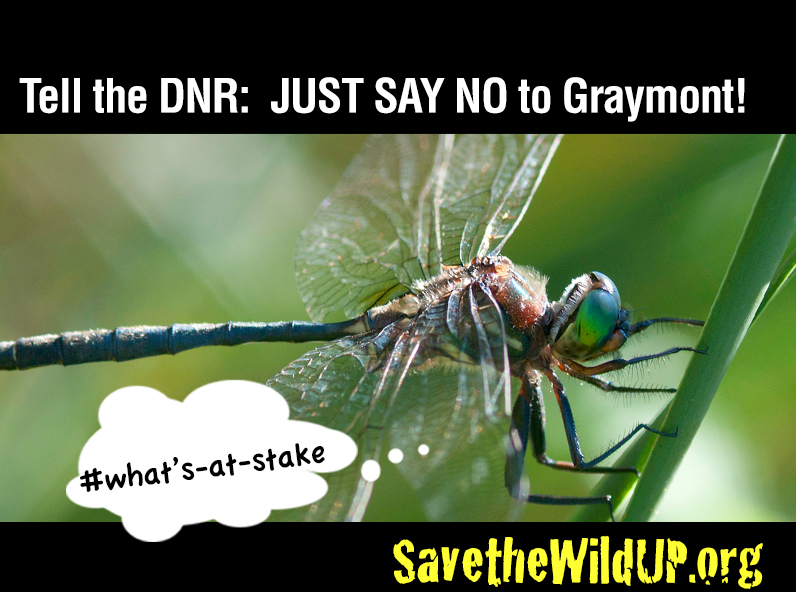
The area under consideration includes fragile wetlands and critical ecosystems. These public lands support unique hydrology and biodiversity, including “karst” habitat identified in Michigan’s Natural Features Inventory, limestone features (cliffs, pavement, sinkholes, caves) and special ecologies uniquely adapted to limestone: bats reliant on limestone caves, globally-rare “alvar” plant communities, and limestone wetlands critical to the endangered Hine’s Emerald Dragonfly, termed “one of North America’s rarest dragonflies” by the U.S. Fish & Wildlife Service.

The collective letter of opposition is signed by individual citizens as well as major groups, including the Michigan League of Conservation Voters, Upper Peninsula Environmental Coalition, Friends of the Land of Keweenaw’s Board of Directors, the Chippewa Ottawa Resource Authority, the Central U.P. Group of the Michigan Chapter of the Sierra Club, Yellow Dog Watershed Preserve, Concerned Citizens of Big Bay, Save the Wild U.P., the Sault Ste. Marie Tribe of Chippewa Indians, the Keweenaw Bay Indian Community, Students for Sustainability of Northern Michigan University, Northwoods Native Plant Society, Citizens for Alternatives to Chemical Contamination, Citizens Against the Rexton Project, Concerned Clergy of Marquette, the Marquette Unitarian Universalists Social Action Committee and multiple individual property owners in Trout Lake, MI.

In the letter, the groups enumerate serious environmental and economic concerns, including “…the displacement of existing limestone quarrying jobs, and the loss of sustainable, long-term jobs in the forestry and tourism sectors.” In addition, “the sale of these lands interferes with Indian tribes’ rights by having an adverse impact on fishing, hunting and gathering activities of tribal members under the 1836 treaty.”

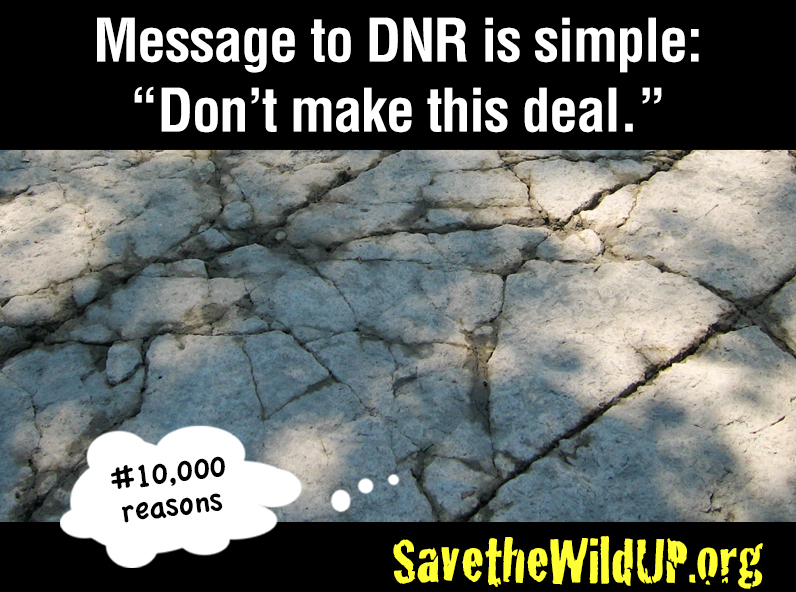
meme-Graymont-simplemessage

“Graymont recently revised the land transaction for the umpteenth time, increasing their proposed royalty payments to 18.75 cents per ton — but only for a short duration,” said Kathleen Heideman, SWUP’s president. “That’s a pittance in comparison to current market values and contemporary royalty offers. It all adds up to nothing, really.”

“These are serious and unresolvable objections,” said Alexandra Maxwell of Save the Wild U.P. (SWUP), who helped organize the collective letter of opposition. “Our message to Director Creagh is simple: don’t make this deal.” According to Maxwell, Save the Wild U.P. has been following the developments of this project since Graymont submitted its application; SWUP and other groups have consistently attended public meetings and submitted commentary critical of this potential land sale. “Now a majority of environmental organizations and concerned citizens throughout the U.P. have reached a clear consensus–the Graymont project must be stopped.”

The DNR will be accepting written comment from the public concerning the newest revision of the Graymont proposal through March 19th. “We strongly urge folks to review the facts,” said Maxwell, “and then write directly to Director Creagh, asking him to reject the Graymont land deal. Concerned citizen still have time to protect their public lands, in their own words.”

Written commentary may be submitted to: DNR-GraymontProposalComments@michigan.gov

Comments can also be mailed to the Roscommon Customer Service Center, ATTN: Kerry Wieber, 8717 N. Roscommon Rd, Roscommon, MI 48653.

“A foreign mining company wants to buy 10,000 acres of our public land?” said Heideman. “By my calculation, that’s ten thousand great reasons to reject the deal.”

The group’s letter can be viewed or downloaded here:  Letter of Unified Opposition to Graymont Land Transaction

meme-Graymont-whatsatstake

###

Save the Wild U.P. is a grassroots environmental organization dedicated to the preservation of the Upper Peninsula of Michigan’s unique cultural and environmental resources. For more information or to schedule an interview, contact info@savethewildup.org or call (906) 662-9987.


Political grandstanding on behalf of CR 595

FOR IMMEDIATE RELEASE

Save the Wild U.P. opposes political grandstanding on behalf of CR 595

MARQUETTE – Grassroots environmental group Save the Wild U.P. (SWUP) expressed disappointment over the recent flurry of “Resolutions” sponsored by lawmakers in support of the Marquette County Road Commission’s lawsuit against the U.S. Environmental Protection Agency (EPA). SWUP opposes House Resolution 13, House Concurrent Resolution 1, and Senate Resolution 9 (pending).

According to SWUP, these resolutions, drafted in support of the Road Commission’s lawsuit against the EPA, are an attempt to resurrect the previously defeated County Road 595. The 595 route would have cut through the Dead River and Yellow Dog Watersheds, the Mulligan Creek headwaters, Voelker Creek, Wildcat Canyon and more, on its way from Eagle Mine to the Humboldt Mill.

“The EPA, the U.S. Army Corps of Engineers (USACE), and the US Fish & Wildlife Service (USFWS) all objected to the construction of this road, as did area residents and property owners who want nothing to do with mine traffic passing their isolated and serene camps,” said Alexandra Maxwell, SWUP interim director.

“Suggesting that a few resolutions will “make the EPA back down” is ludicrous,” said Gail Griffith, retired professor of Chemistry at Northern Michigan University and SWUP board member. “This is exactly why the Environmental Protection Agency was founded: ‘To protect human health and the environment.’ This requires the EPA to make difficult decisions — including saying ‘no’ when special interests, corporate lobbyists or politicians promote projects that would benefit industry at the expense of our environment.”

“Our state government is not supposed to be a corporate-errand boy. I expect politicians to participate in democracy and represent the will of the taxpaying citizens who elected them, not the international corporations that mine our lands and pollute our water,” said Alexandra Maxwell, Save the Wild U.P.’s interim director. “But let’s be honest — these resolutions are the political equivalent of a group selfie — politicians trying to get their names mentioned to convince the folks back home they’re supporting jobs.”

“We must trust that as a federal agency, the EPA won’t be pushed around by corporate bullies — whether the bullies are big oil companies polluting our coastlines, global mining companies who’d profit from tearing apart our wild lands, poorly informed politicians, or a grudge-bearing road commission,” said Kathleen Heideman, Save the Wild U.P. president. “The EPA shouldn’t rubber-stamp anything. They should protect our environment, period. Save the Wild U.P. affirms the decision of the EPA, and we will continue to oppose any action that threatens the clean water and healthy watersheds of the Upper Peninsula of Michigan.”

“This blatant attempt to pressure the EPA to approve a mining haul road through the MIchigamme Highlands is despicable,” said Steve Garske, biologist and SWUP board member. “When the permit for Eagle mine was approved, then-owner Rio Tinto agreed to haul the ore to a point north of Marquette, where it would be transferred to a rail line. If Eagle Mine had been held to their word, these transportation issues would have been put to rest long ago.”

County Road 595:  "Bad idea, wrong place."

“The CR 595 project was destined to fail. And it did fail,” said Jeffery Loman, Keweenaw Bay Indian Community tribal member and former federal oil regulator. “Now some politicians want us to believe that their proposed resolutions will result in the building of this mine haul road. Did Congress create the environmental law that the EPA is responsible for enforcing with some provision that says ‘follow the law until some politicians want you to ignore it in order to support their friend’s businesses’? It’s insulting, really.”

“Our local politicians in Lansing seem to think that issuing wetlands permits is a question of cheering loudly rather than following exacting regulations and rules. They tried the same political full court press two years ago. It was a failing strategy then and deserves to fail again. They should do their wetlands homework,” said Jon Saari, SWUP’s vice president.

Save the Wild U.P. demands full disclosure and transparency concerning the recent decisions of the Marquette County Road Commission, which is attempting to circumvent federal regulations. Private interests are trying to undermine hard-won environmental protections for clean water and wetlands — federal regulations intended to protect our drinking water and our trout streams. Save the Wild U.P. urges citizens to fully consider the long-term implications of the CR 595 proposal, and question the motivations of any elected officials who support this lawsuit against the Environmental Protection Agency.

Save the Wild U.P. was formed in 2004 to protect the U.P.’s unique communities, lakes, and lands from the hazards of sulfide mining, which threatens to contaminate the Lake Superior Watershed with acid mine drainage.

###

Justifications questioned as Road Commission sues EPA

FOR IMMEDIATE RELEASE

Save the Wild U.P. questions justifications as Road Commission sues EPA

MARQUETTE – Grassroots environmental group Save the Wild U.P. (SWUP) has serious objections to the narrative being created by politicians surrounding a lawsuit brought against the Environmental Protection Agency (EPA) by the Marquette County Road Commission (MCRC). In 2013, the EPA denied the Michigan Department of Environmental Quality (DEQ) authority to issue permits that would allow construction of the proposed CR 595, an industrial haul-road for Eagle Mine. This decision was based on the potential for great harm to existing wetlands and vital watersheds.

“The MCRC says their road project was not properly considered by the EPA, but nothing could be further from the truth. How many times will they try to push this idea down the public’s throat? Multiple federal agencies reviewed this project and outlined their objections. Those objections still stand. As concerned citizens, we outlined our objections too — nothing has changed. The 595 road remains a terrible idea for the environment, as well as taxpayers,” said Gail Griffith, emeritus professor of Chemistry at Northern Michigan University and SWUP board member.

“We’re talking about the wild heartland of Marquette County, a remote and ecologically sensitive area. When I traveled the entire proposed route in 2009, I saw hundreds of narrow-leaved gentian plants growing along the northern end,” said botanist and SWUP board member Steve Garske. He believes the EPA made the right decision. “This gentian is locally common around the Yellow Dog Plains but rare in Michigan — it occurs in only three counties in the state.” He also documented two populations of the rare Farwell’s water milfoil along the route.

The proposed road would have cut through the Dead River and Yellow Dog Watersheds, the Mulligan Creek headwaters, Voelker Creek, Wildcat Canyon and more. “I know the Wildcat Canyon area… it is a treasure of streams, rocky ledges and deep woods that would be destroyed if used as a corridor for a haul road,” said Lynn McGlothlin Emerick, a longtime Upper Peninsula resident.
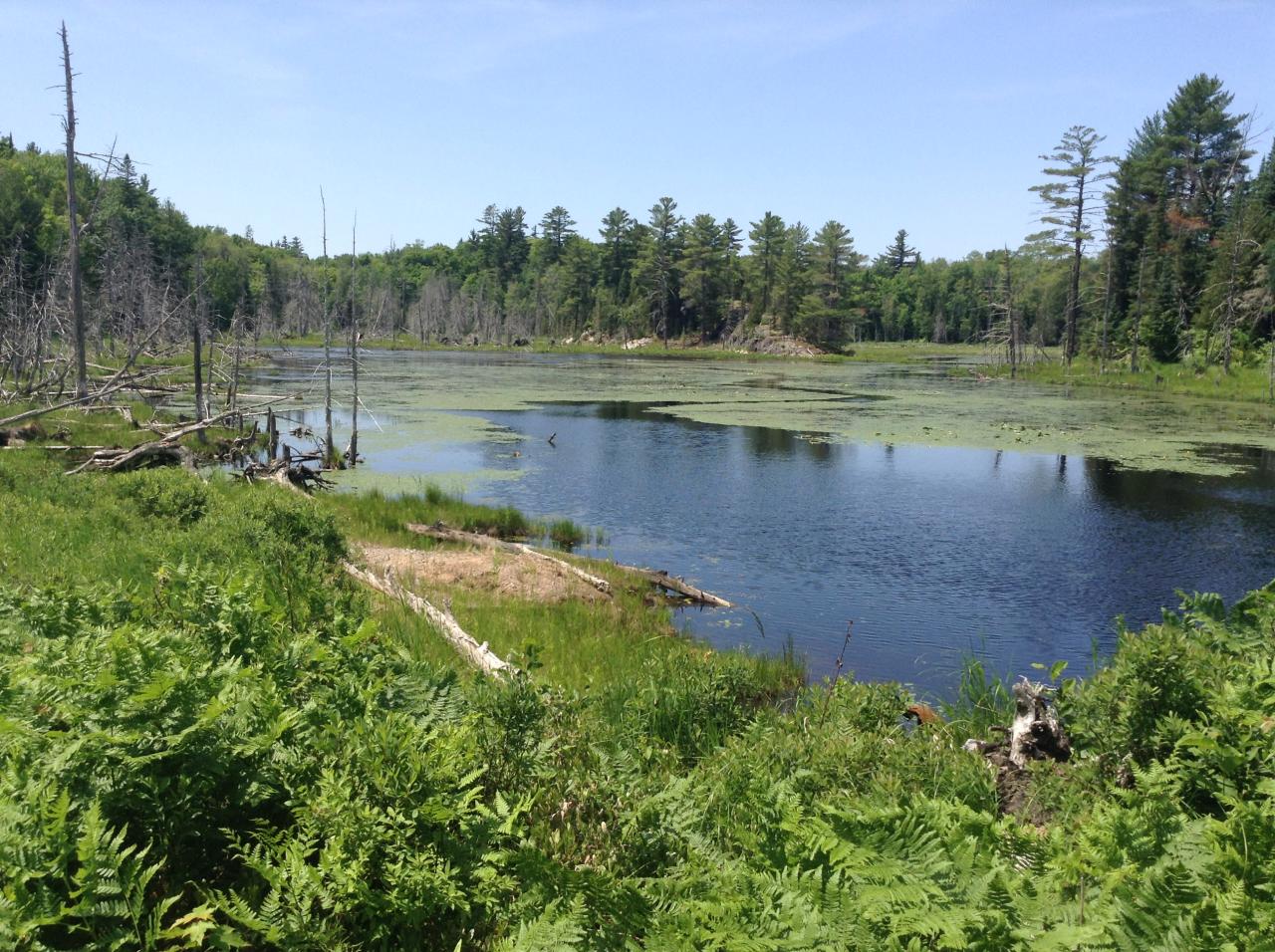
Wildcat Canyon Creek crossing, along the proposed 595 route, which would require 22 stream and river crossings.

Wildcat Canyon Creek crossing, along the defeated CR 595 route.

“The EPA, The U.S. Army Corp. of Engineers (USACE), and the US Fish & Wildlife Service (USFWS) all objected to the construction of this road, as did residents and property owners in the area who want nothing to do with mine-traffic passing their isolated and serene camps,” said Alexandra Maxwell, SWUP interim director.

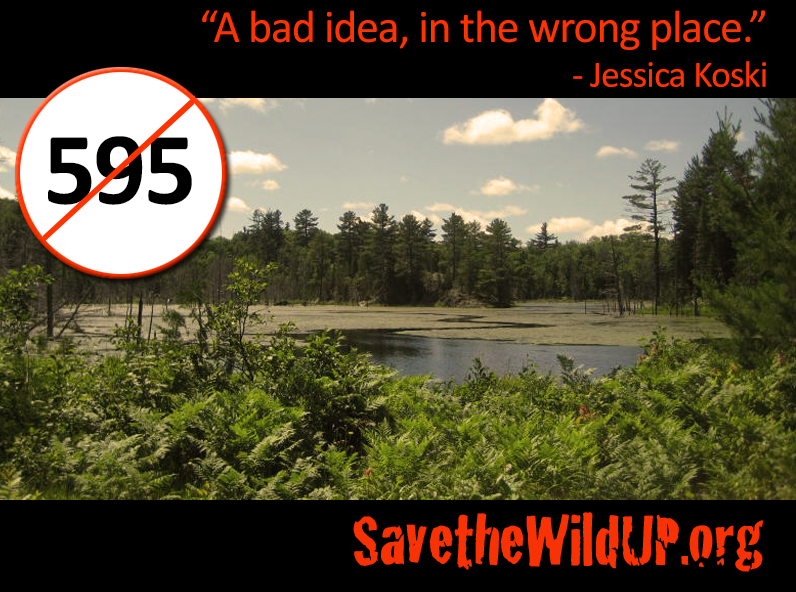
“595 would irreversibly impact high quality wetlands at the headwaters of several watersheds and foreseeably lead to additional roads that would open up one of Michigan’s last remaining wilderness areas to resource exploitation,” according to Jessica Koski, Assistant Mining Technician of the Keweenaw Bay Indian Community (KBIC). “Michigan’s economy depends on tourism dollars from hunting, fishing and outdoor recreation businesses enabled by wetlands. Yet, wetlands are on the frontlines of development and their preservation is vastly underappreciated. Michigan has already lost more than half of its original 11 million acres of wetlands due to filling and draining.”

In recent weeks, the Road Commission has been seeking resolutions from local townships, county boards, and U.P. politicians, to back up their claims of ‘overwhelming support’ for 595. Demonstrated support has actually been lukewarm, despite much political drum-beating. The Marquette County Board failed to support the MCRC’s lawsuit, and half of the county townships are opposed. Northern Michigan University’s Board of Trustees – dedicating five minutes to discussion of the agenda item – voted to offer a resolution of support for County Road 595, but it should be remembered that the Trustees are political appointees.

In response to doubts regarding the costs and possible repercussions of the lawsuit, a group was formed to fund the litigation and inspire public support: Stand U.P., a 501c4 organization described as a ‘local non-profit, non-political group’ created to allow citizens to contribute money to fund the lawsuit. Formed at the request of Senator Tom Casperson, Stand U.P. will be able to accept unlimited corporate funding without disclosure and in turn, can support, endorse, and communicate on behalf of candidates.

“It undermines democracy. This so-called nonprofit will be siphoning corporate dollars to manipulate a public agency — the Marquette County Road Commission — into doing the bidding of special interests,” said Alexandra Thebert, former executive director of Save the Wild U.P. “Special interests are trying to tell us this lawsuit is a David versus Goliath battle, but a quick look at abandoned downtowns across the U.P. and the piles of mining waste across our landscape reveals the true Goliath — multinational companies getting rich off our labor and resources while leaving taxpayers to foot the bill for environmental and economic destruction.”

“The people in the Upper Peninsula of Michigan aren’t stupid,” said Jeffery Loman, Keweenaw Bay Indian Community (KBIC) tribal member and former federal oil regulator. “They know what Stand U.P. is. It’s a comedy act.”

“Let’s be honest. The plan for 595 collapsed under the weight of its own inadequacies, and now there’s no mining money left on the table to pay for it. This is a zombie road,” said Kathleen Heideman, SWUP’s president. “This is a dead idea, dug up by politicians who want to frame the EPA as a ‘big bad federal agency’ that only cares about wetlands and clean water. Our elected officials are comparing the ‘freedom to burn wood to heat our homes’ with the ‘freedom to build roads.’ Freedom to build more roads? Our county doesn’t have enough money to fix potholes and rusty bridges and keep our existing roads plowed, so it’s outrageous to talk about funding another Road to Nowhere.”

Kennecott proponents first dreamed of a ‘South Road,’ a napkin-drawing which soon became the “Woodland Road,” backed by private developers, including Eagle Mine, who stood to gain financially from a new route into the wild interior of Marquette County. But when the Woodland Road was rejected by the EPA, USFWS and USACE, Kennecott withdrew their application in May of 2010, citing “environmental obstacles imposed by federal regulators coupled with the uncertain timelines and cost.”

The Marquette County Road Commission (MCRC) persisted, however, changing the name of the project to County Road 595, citing the public’s need for recreational and emergency vehicle access. In written comments objecting to the 595 proposal, the USACE stated “there are no references to the need for a north-south connector west of the Basin, in county planning documents or resolutions prior to 2010.” Clearly, this was still a haul road, dressed up as a county project.

“The Road Commission’s lawsuit against the EPA is being pushed by a consortium of private interests — logging, aggregate and real estate — that would benefit financially from County Road 595 being built,” according to Catherine Parker. “The suit is also about egos and the mistaken view that incremental ‘development’ does not equate with ultimate destruction.”

“Having sifted through years’ worth of letters, reports, and communications between various regulators, I can say with certainty that this project is far worse than most people realize. The Army Corps of Engineers, US Fish and Wildlife Service, Michigan DEQ and Michigan DNR, along with the EPA, all had serious concerns that could not be resolved. Field staff in our state agencies did not support construction of 595 — only the political appointees at the top did so,” said Catherine Parker. “Let them sue. Perhaps EPA will revoke the state’s somewhat dubious wetlands permitting authority as a result.”

“The lawsuit being brought against the EPA by the MCRC is shocking and feels more like a child’s tantrum than anything that has legitimate standing in a court of law,” said Alexandra Maxwell, SWUP’s interim director. “The EPA’s objections to the construction of this road were valid and protective of one of the region’s most important headwaters .”

Save the Wild U.P. demands full disclosure and transparency concerning the recent decisions of the Marquette County Road Commission, which is attempting to circumvent federal regulations — and the will of the people. Private interests are trying undermine hard-won environmental protections for clean water and wetlands — federal regulations intended to protect our drinking water and our trout streams. Save the Wild U.P. urges citizens to fully consider the long-term implications of the CR 595 proposal, and question the motivations of any elected officials who support this lawsuit against the Environmental Protection Agency.

Save the Wild U.P. was formed in 2004 to protect the U.P.’s unique communities, lakes, and lands from the hazards of sulfide mining, which threatens to contaminate the Lake Superior Watershed with acid mine drainage.

###

TIMELINE – COVERAGE OF THE COUNTY ROAD 595 ISSUE


4-22-10 “Mine Opponents Comment on Woodland Road Plan” (Save the Wild U.P.)
http://savethewildup.org/2010/04/mine-opponents-comment-on-woodland-road-plan/


1-18-11 “Kennecott Abandons Woodland Road” (ABC-10)
http://abc10up.com/kennecott-abandons-woodland-road/


8-29-12 “Strong Public Opposition to CR 595 at Hearing” (Yellow Dog Watershed Preserve)
http://www.yellowdogwatershed.org/blog/strong-public-opposition-to-cr-595-at-hearing/


8-30-12 “EPA notes CR 595 objections: wetlands impact central to federal concerns” (The Mining Journal)
http://www.miningjournal.net/page/content.detail/id/579258/EPA-notes-CR-595-objections.html


9-11-12 “Reps push EPA on CR 595”  (The Mining Journal)
http://www.miningjournal.net/page/content.detail/id/581667.html


12-5-12 “EPA drops one objection to CR 595 proposal” (TV6)
http://www.uppermichiganssource.com/news/story.aspx?id=833953


12-6-12 “EPA Partially Removes Objection to CR 595” (Lake Superior Community Partnership)
http://marquette.org/epa-partially-removes-objection-to-cr-595/


1-7-13 “County Road 595 Kicked to the Curb” (Yellow Dog Watershed Preserve)
http://www.yellowdogwatershed.org/blog/county-road-595-kicked-to-the-curb/


3-17-13 “D.C. hearing to address CR 595 roadblocks” (The Mining Journal)
http://www.miningjournal.net/page/content.detail/id/585411.html


3-1-14 “Specter of CR 595: Will the Zombie Rise Again?” (Jon Saari, UPEC Newsletter)
http://www.upenvironment.org/newsletters/UPEC_2014_SpringNewsletter.pdf


7-8-14 “CR 595 – Under Construction?” (Save the Wild U.P.)
http://savethewildup.org/2014/07/cr-595-under-construction/


8-1-14 “DEQ investigating road work: Environmental groups concerned…” (The Mining Journal)
http://www.miningjournal.net/page/content.detail/id/602472/DEQ-investigating-Plum-Creek-road-work.html


12-26-14 “State lawmakers discuss future of County Road 595” (TV6)
http://www.uppermichiganssource.com/news/story.aspx?id=1141395


12-29-14 “County not suing EPA over 595, reps say they’d back litigation…” (The Mining Journal)
http://www.miningjournal.net/page/content.detail/id/611220/County-not-suing-EPA-over-595.html


1-22-15 “Road Commission prepares for lawsuit against E.P.A.” (TV6)
http://www.uppermichiganssource.com/news/story.aspx?list=194550&id=1153222


1-28-15 “Marquette County Board, residents, environmental groups oppose Road Commission vote to sue EPA over CR 595; lawsuit funding sources undisclosed” (Keweenaw Now)
http://keweenawnow.blogspot.com/2015/01/marquette-county-board-residents.html


2-4-15 “(Ishpeming) Council to consider supporting CR 595” (The Mining Journal)
http://www.miningjournal.net/page/content.detail/id/613351/Council-to-consider-supporting-CR-595.html


2-4-15 “Michigan lawmakers sponsor resolutions supporting County Road 595” (TV6)
http://www.uppermichiganssource.com/news/story.aspx?id=1159366


2-6-15 “Boards and townships still split CR-595 while elected reps support EPA lawsuit” (TV6)
http://www.uppermichiganssource.com/news/story.aspx?id=1141395


2-9-15 “Environmentalists call lawsuit against EPA ‘child’s tantrum’” (ABC-10)
http://abc10up.com/environmentalists-call-lawsuit-against-epa-childs-tantrum/


2-11-15 “County Road 595 suit, project gaining favor” (The Mining Journal)
http://www.miningjournal.net/page/content.detail/id/613735/County-Road-595-suit–project–gaining-favor.html


2-3-15 “Stand U.P. group raising funds for County Road 595 lawsuit” (The Mining Journal)
http://www.miningjournal.net/page/content.detail/id/613283/Stand-U-P–group-raising-funds-for-County-Road-595-lawsuit.html
SWUP Urges DNR Director: Reject Graymont Proposal

FOR IMMEDIATE RELEASE

Save the Wild U.P. Urges DNR Director: Reject Graymont Mining’s Proposed Land Transaction

MARQUETTE — Following yesterday’s meeting of the Natural Resources Commission meeting in Lansing, the Michigan Department of Natural Resources (DNR) Director Keith Creagh announced his approval for a massive exchange of mineral rights — totaling 1,700 acres — for the benefit of Graymont, Inc., a Canadian limestone mining corporation.

“We are disappointed by the DNR’s approval of the mineral rights exchange,” said Kathleen Heideman, president of grassroots environmental group, Save the Wild U.P. (SWUP).

“Upper Michigan environmental organizations, including SWUP, have submitted extensive written comments, outlining our serious objections to the Graymont proposal, including the exchange of mineral rights. This DNR decision fails to serve the DNR’s mission of conservation, protection, and public enjoyment of public natural resources. It benefits a foreign mining company at the expense of Michigan’s environment,” according to Steve Garske, biologist and SWUP board member.

On February 6th, the DNR received yet another revision of Graymont’s ever-shifting proposal. No decision has been announced regarding Graymont’s proposed land transaction, which remains open for public comment until March 19th, when a decision will be announced at the meeting of the Natural Resources Council in Roscommon, MI.

“The Graymont proposal has become an administrative circus,” said Jon Saari, vice president of SWUP. “First introduced in 2012, the proposal gets revised a bit every time objections are raised, including most recently a week before a decision was to be made by the DNR Director! How are we in the public supposed to comment on this moving target? Which proposal? The original one? The final one? The final final one? This is no way to conduct public business. It is a joke. The Graymont proposal should be thrown out for toying with the DNR and the public.”

“Save the Wild U.P. renews our call for Director Creagh to reject Graymont’s Land Transaction,” said Alexandra Maxwell, SWUP interim director. “Public lands must be managed and conserved for public benefit.”

Still pending, the Graymont land sale threatens to sacrifice public lands for the benefit of a foreign mining company, at the bargain price of a few hundred dollars per acre, although a majority of the citizens and taxpayers in the affected areas are vehemently opposed to the Graymont sale.

“The Graymont Proposal makes no sense, economically,” says Maxwell. “Does the DNR have qualified mining staff involved in evaluating this proposal? Graymont promises that a handful of mining jobs would be created, but residents believe that any short-term economic gain is far outweighed by the loss of existing, sustainable, long-term jobs in forestry and tourism sectors.”

The Graymont proposal includes lands currently open to the public for hunting and recreational trails, lands supporting wildlife, and managed for timber — contiguous forest lands, considered “some of the most productive forest land in the Eastern Upper Peninsula” by the Upper Peninsula Environmental Coalition.

The targeted area also includes fragile wetlands and critical ecosystems. These public lands support unique hydrology and biodiversity, including protected karst habitat identified in Michigan’s Natural Features Inventory. Karst landscapes include limestone features (cliffs, pavement, sinkholes, caves) and special ecologies uniquely adapted to limestone: bats reliant on limestone caves, globally-rare “alvar” plant communities, and limestone wetlands supporting the endangered Hine’s Emerald Dragonfly, termed “one of North America’s rarest dragonflies” by the U.S. Fish & Wildlife Service.

Graymont proposal area

Graymont proposal area

Graymont proposal area

Graymont proposal area

Graymont proposal area

Graymont proposal area

Graymont proposal area

Graymont proposal area

In opposing the proposed sale of lands to Graymont, Save the Wild U.P. affirms the conclusion of the Upper Peninsula Environmental Coalition: “We can see absolutely no justification for the State to even consider the sale of such a large and important parcel of public land to a mining company, or any other private entity for that matter (…) this sale will undermine the public’s confidence in the ability of DNR to manage our public lands for the benefit of all citizens of this state.”

Save the Wild U.P. collectively voices our opposition concerning this unprecedented, environmentally-destructive sale of publicly held lands. The proposed sale would fail Michigan’s taxpayers, tribes, and the Eastern Upper Peninsula’s growing sustainable forest and tourism economies, and especially Michigan’s environment, including critical habitat and endangered species. We urge the Michigan Department of Natural Resources to reject the Graymont Proposal “Land Transaction” as being inconsistent with the DNR’s mission, and a bad deal for Michigan.

The public is urged to submit written comment to: DNR-GraymontProposalComments@michigan.gov

Comments can be mailed to the Roscommon Customer Service Center, ATTN: Kerry Wieber, 8717 N. Roscommon Rd, Roscommon, MI 48653.

Founded in 2004, Save the Wild U.P. is a grassroots environmental organization dedicated to preserving the Upper Peninsula of Michigan’s unique cultural and environmental resources. For more information or to schedule an interview, contact info@savethewildup.org or call (906) 662-9987. Get involved with Save the Wild U.P.’s work at savethewildup.org or follow SWUP on Facebook at facebook.com/savethewildup or Twitter @savethewildup

meme-Graymont-whatsatstake

County Road 595: A bad idea in the wrong place

Featured

By Jessica Koski*

Proposed Marquette County Road 595 would irreversibly impact high quality wetlands at the headwaters of several watersheds and foreseeably lead to additional roads that would open up one of Michigan’s last remaining wilderness areas to resource exploitation.

Wetlands are a foundation of our nation’s water resources and are one of the most biologically productive ecosystems on Earth, rivaling that of tropical rainforests. Vital to the health of waterways, wetlands recharge groundwater, absorb floodwaters and filter pollution. They provide essential wildlife habitat, agricultural resources (berries, wild rice), timber production and economic activities. Michigan’s economy depends on tourism dollars from hunting, fishing and outdoor recreation businesses enabled by wetlands.

Yet, wetlands are on the frontlines of development and their preservation is vastly underappreciated. Michigan has already lost more than half of its original 11 million acres of wetlands due to filling and draining.

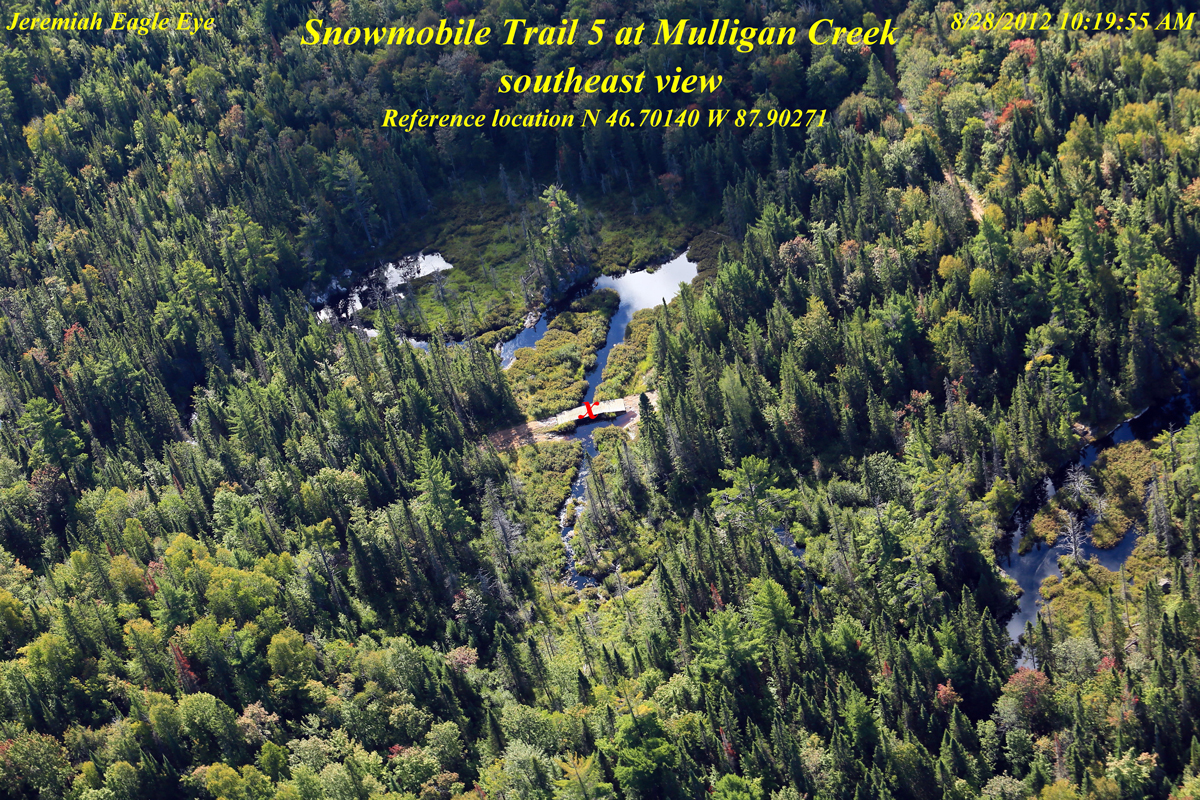
Aerial view of Mulligan Creek, showing the Snowmobile Trail #5 crossing, proposed route of County Road 595. Photo by Jeremiah Eagle Eye.

Before:  Aerial view of Mulligan Creek, showing the Snowmobile Trail #5 crossing, proposed route of County Road 595. Photo by Jeremiah Eagle Eye.


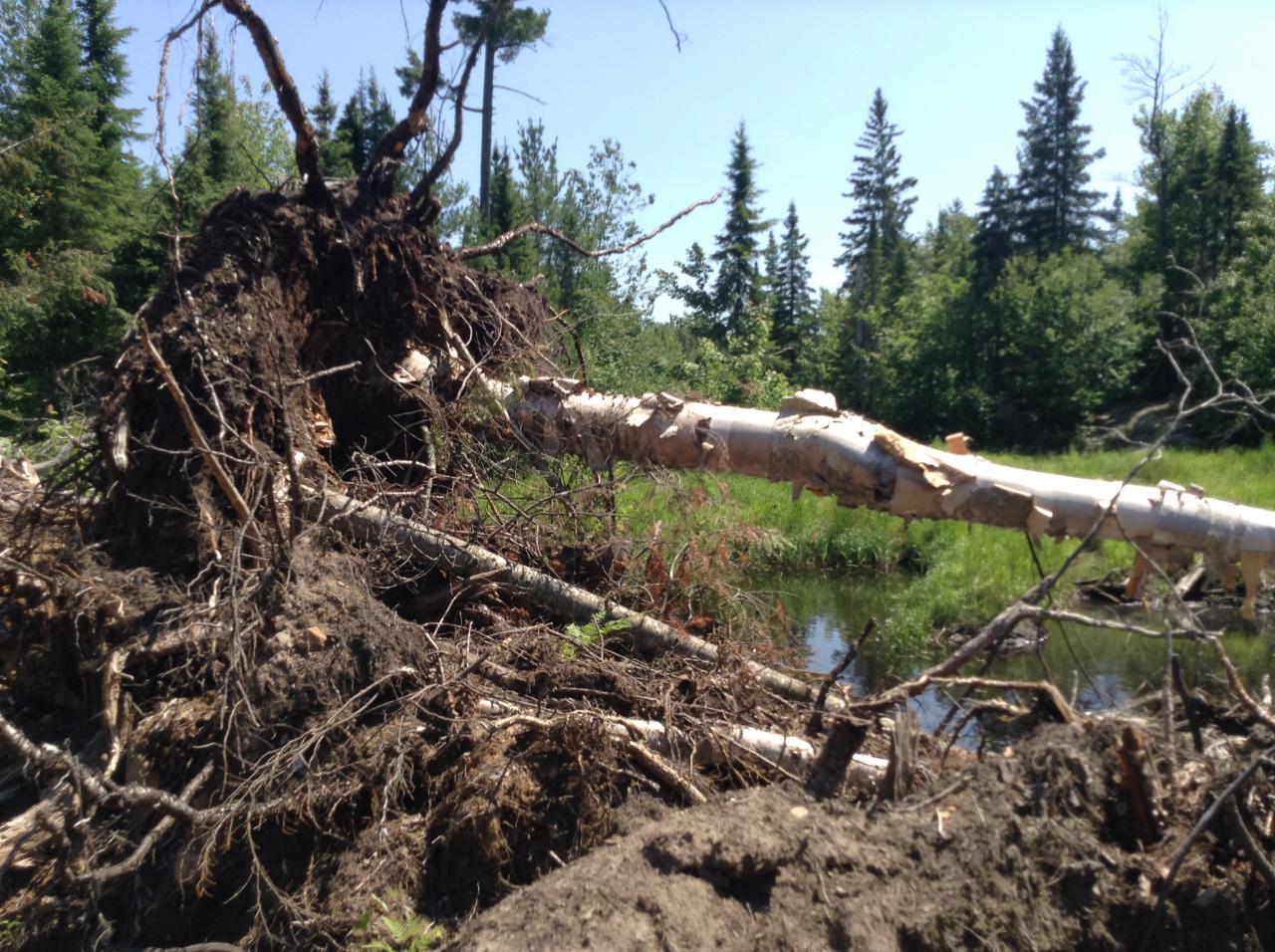
After:  Mulligan Creek fragile wetlands were degraded by Plum Creek Timber's illegal "road improvements" along the 595 route, as documented in 2014.

After: Mulligan Creek fragile wetlands were degraded by Plum Creek Timber’s illegal “road improvements” along the 595 route, as documented in 2014.

From an Ojibwe standpoint, many culturally significant plants, foods and medicines occur in wetlands and within the County Road 595 project area. These resources are an essential part of Ojibwe lifeway; and tribal rights of access, collection and use are guaranteed through treaties signed with the United States.

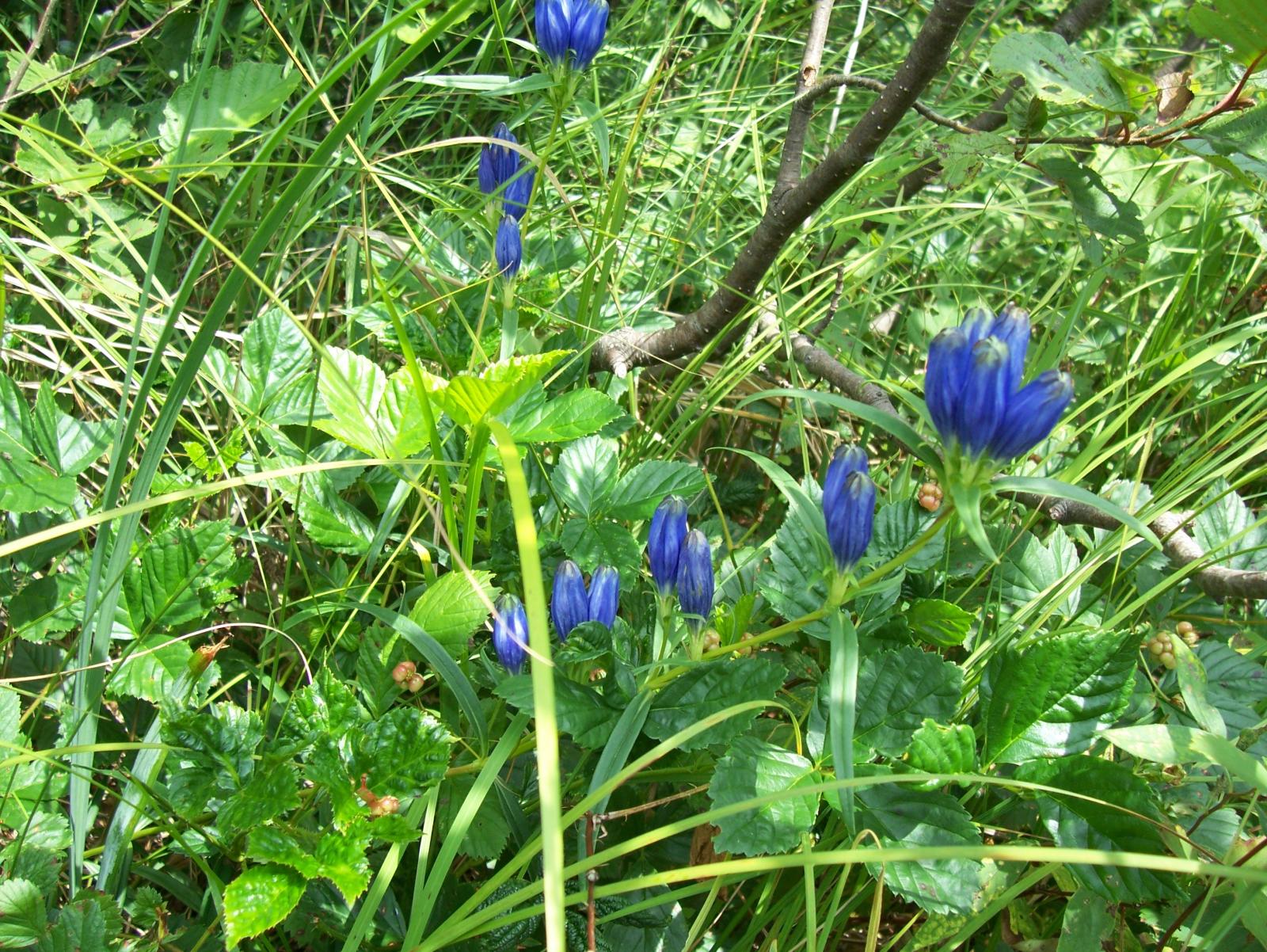
Threatened (legally protected) with a status of "imperiled" in Michigan.

Protected: Narrow-leaved gentian is threatened (legally protected) with a status of “imperiled” in Michigan. Found along the proposed 595 route.

Last month, the Marquette County Road Commission voted to sue the U.S. Environmental Protection Agency for its “arbitrary and capricious” objection to County Road 595 over two years ago. In reality, the MCRC failed to submit an application consistent with federal Clean Water Act requirements.**

In EPA’s objection letter, the Michigan Department of Environmental Quality was given detailed requirements to address inadequate wetland minimization and compensation plans, and 30 days to satisfy the objection or deny the permit. MDEQ denied the permit, although the process could have transferred to U.S. Army Corps of Engineers authority.

Prior to a decision, EPA heard directly from the public in Marquette on August 28, 2012. Many citizens expressed concerns in opposition to County Road 595, contrary to many government officials.

Wildcat Canyon Creek crossing, along the proposed 595 route, which would require 22 stream and river crossings.

Wildcat Canyon Creek crossing, along the proposed 595 route, which would require 22 stream and river crossings.

The lawsuit’s price tag is $500,000 and road construction is estimated to cost $80 to $100 million, without additional maintenance costs. Eagle Mine says they won’t fund the lawsuit or road. Taxpayers are promised they won’t foot the bill. According to local officials, state Sen.Tom Casperson, R-Escanaba, is a driving force behind the lawsuit and an assembly of secret private funders.

Casperson’s road rage is currently attempting to amend Michigan’s Constitution to rob the state’s Natural Resources Trust Fund for timber and mining infrastructure. This is contrary to the opinion of Michigan’s Attorney General and the original intent of the Fund since 1976 to support environmental preservation and enhance outdoor recreation benefits for the public.

Recent Eagle Mine trucking accidents are undeniably a public safety concern. However, even if MCRC is successful, it would be years before County Road 595 could be a reality. Are there alternative actions to more immediately protect the public from ore trucks? Yes.

In June 2013, the Marquette City Commission asked MDEQ to require Eagle Mine to amend its Environmental Impact Assessment regarding transportation. MDEQ denied the request claiming the city is not within the mine’s “affected area.”

Marquette County could object to MDEQ’s unwillingness to enforce the state mining rules. Part 632 states that an EIA shall define the affected area. Because the company significantly changed transportation from rail to truck after receiving a mining permit, the people of Marquette County were never rightfully provided an opportunity during the permitting process to weigh in on transportation impacts and the now inaccurate affected area.

Eagle Mine can also go beyond regulatory requirements and implement best practices. In fact, their original permit included hard cover trailer tops, but switched to soft cover tarps for easier loading and unloading. Is a convenience for Lundin Mining Corp. more important than public safety?

The company could also reconsider its original rail option. This would create jobs, alleviate stress on public road infrastructure and better protect public safety and the environment.

Rail probably could have saved much wasted investment and headache for the local community. Also, imagine if as much political support and energy exhausted into County Road 595 went toward a truck bypass around the city.

Ultimately, local officials are empowered with zoning and ordinance authority to establish more stringent conditions for how, when and where heavy ore trucks travel through the city.

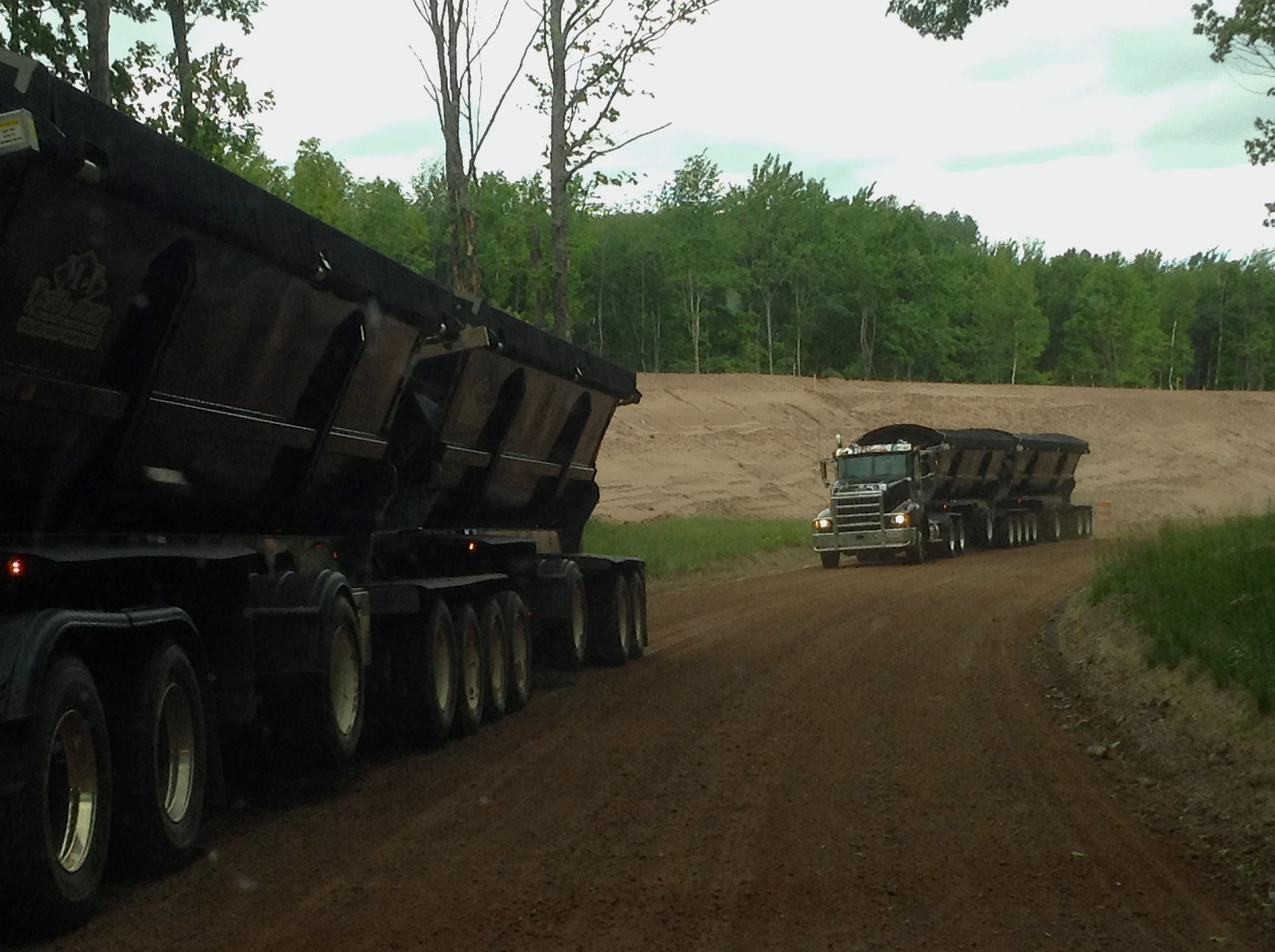
Eagle Mine ore trucks

Note: author Jessica Koski is a member of the Keweenaw Bay Indian Community (KBIC). She is an alumna of the Yale School of Forestry & Environmental Studies and currently serves as Mining Technical Assistant for the KBIC. This article appeared in the Marquette Mining Journal on Sunday, Feb. 8, 2015. It is reprinted here with the author’s permission.